
Dec2005.jpg)
Stirling is the largest city in Central Scotland, with a bustling population of 45,750. The charmingly scenic city is positioned at the mouth of the River Forth and is the centre for local government, industry, higher education and retail. Many travellers choose Stirling as their starting point when visiting Scotland, due to its central location, proximity to other cities and the Southern Highlands. Welcoming nearly two million tourists a year, Stirling has been described as ‘the brooch which clasps the Highlands and the Lowlands together’ and is the gateway to The Trossachs, Scotland’s first national park, which along with picturesque Loch Lomond, should not be missed. The city is full of history but also holds a great cosmopolitan culture, containing a university, three shopping destinations with hundreds of stores, two cinemas and a selection of art galleries.
Historic Stirling
The Randolphfield standing stones and Kings Park prehistoric carvings show that Stirling was originally a Stone Age settlement. Due to its naturally defensible crag, tail hill and commanding position at the foot of the Ochil Hills, the city has been tactically significant since the Romans occupied Great Britain.
When still a town, Stirling was chartered as a royal burgh by King David in the 12th century and many major battles during the Wars of Scottish Independence took place on the Stirling Bridge in 1297. Stirling Castle was sieged several times during the conflict, most significantly in 1304.
Standing near the famous castle, the Church of the Holy Rude is one of the town’s most historically important structures. Built in 1129, it is the second oldest building in the city after Stirling Castle. After going through a catastrophic fire in 1405, it was rebuilt in the 15th century. Along with Westminster Abbey, the building is alleged to be one of the only surviving churches in the United Kingdom to have held a coronation, when James VI of Scotland was crowned in 1567.
Stirling’s port sustained overseas trade, including timber trade with the Baltic and tea trade with India. The introduction of the railways in 1848 meant the river trade began to decline, mainly due to a railway bridge downstream restricting access for shipping. The port ceased to operate after the mid-20th century.
Popular Culture
Film & TV
‘Monty Python and the Holy Grail’ (1973)
A few miles from the city Doune Castle was the setting for much of ‘Monty Python and the Holy Grail’, one of the TV comedy team’s most famous excursions into film. Doune Castle also featured in the 1997 TV historical drama ‘Ivanhoe’ starring Christopher Lee.
‘The Bruce’ (1996)
‘The Bruce’ starring Oliver Reed and Brian Blessed featured the largest filmed reconstruction of a medieval battle ever staged in the British Isles.
Social Media
Additional information on Stirling can be found on its official website Visit Stirling and Stirling Council Twitter.
Famous Faces
A number of famous faces have originated from, or are connected to, Stirling. Just some are listed below.
Mary Queen of Scots (7/8 December 1542 – 8 February 1587) – Queen regnant of Scotland from 14 December 1542 to 24 July 1567 and queen consort of France from 10 July 1559 to 5 December 1560.
King James VI of Scotland (19 June 1566 – 27 March 1625) – King of Scotland as James VI from 24 July 1567 and King of England and Ireland as James I from the union of the Scottish and English crowns on 24 March 1603 until his death.
Sir Henry Campbell-Bannerman, GCB (7 September 1836 – 22 April 1908) – British Liberal Party politician who served as Prime Minister of the United Kingdom from 1905 to 1908 and Leader of the Liberal Party from 1899 to 1908.
Norman McLaren, CC, CQ (11 April 1914 – 27 January 1987) – Scottish-born Canadian animator and film director known for his work for the National Film Board of Canada (NFB).
William John “Billy” Bremner (9 December 1942 – 7 December 1997) – Scottish professional footballer, most noted for his captaincy of the Leeds United team of the 1960s and 1970s.
Landmarks
Stirling Castle
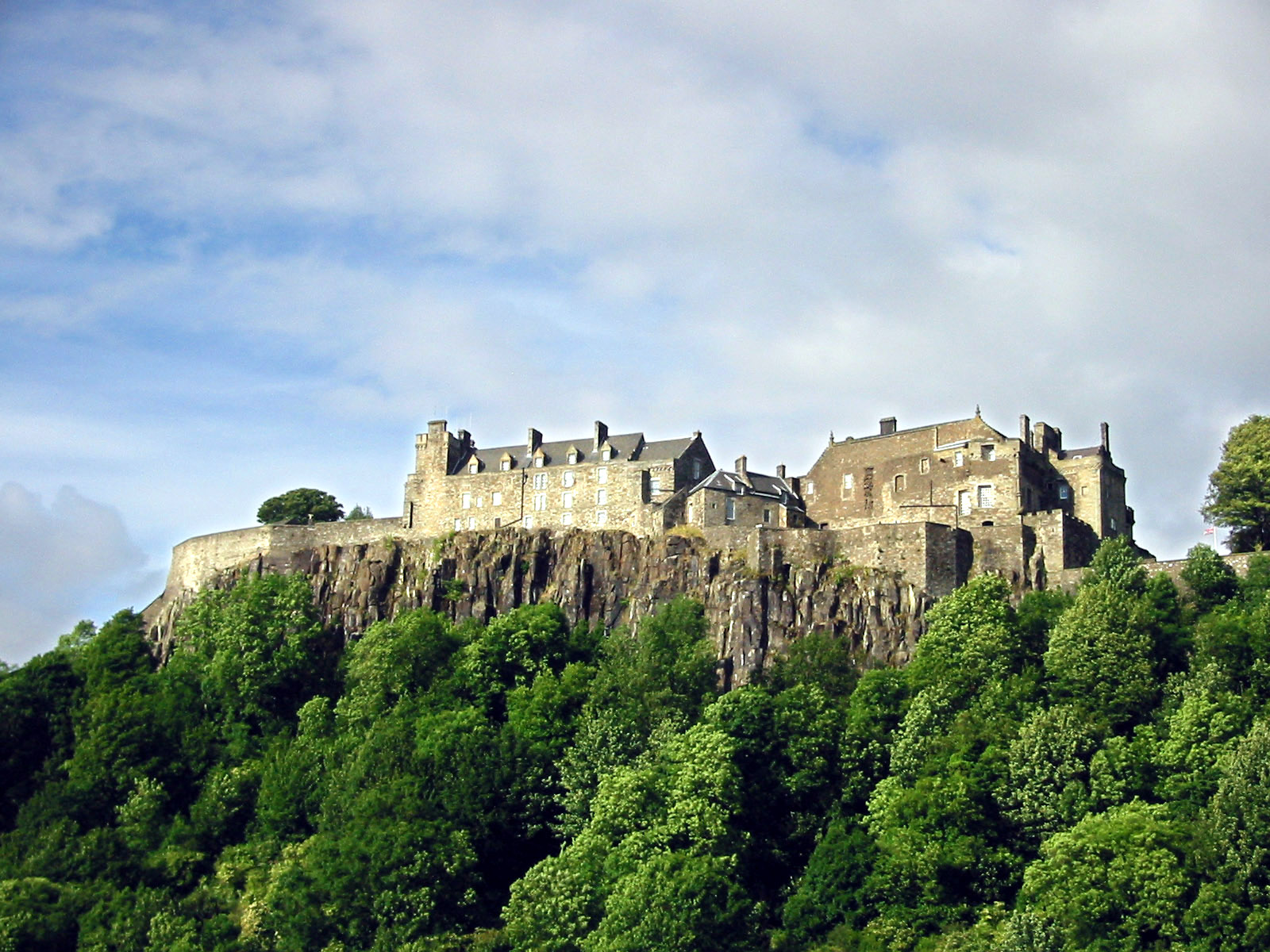
You cannot help drawing parallels with Edinburgh Castle, but many find Stirling’s fortress more atmospheric due to the picturesque location, architecture, historical significance and utterly commanding views combine to make it a grand and memorable sight. This means it draws plenty of visitors, so it’s advisable to visit in the afternoon; many tourists come on day trips, so you may have the castle to yourself by about 4pm.
Old Town
Below Stirling Castle, the steep Old Town has a curiously different feel to modern Stirling, its cobblestone streets packed with 15th to 17th century architectural gems. Its growth began when Stirling became a royal burgh (about 1124), and in the 15th and 16th centuries rich merchants built their houses here. A must see for any visitors of the city.
National Wallace Monument
The National Wallace Monument commemorates the bid for Scottish independence depicted in the film ‘Braveheart’. For over 140 years, this world-famous landmark has fascinated visitors with its exhibits and displays, telling the story of Sir William Wallace. Another must-see when visiting Stirling.